
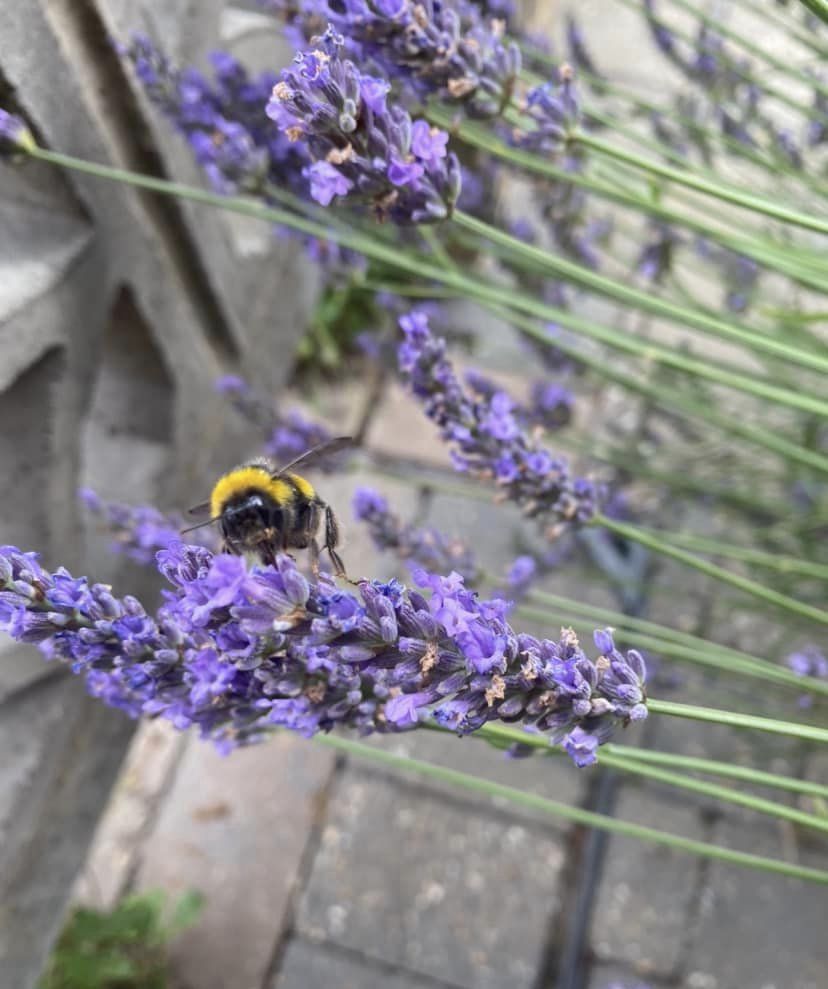
The rise of urban agriculture
Urban areas now account for more than half of the world’s population. The United Nations estimates that by 2050, 68% of the world’s population will live in cities, with rapid urbanisation happening in low-income countries. With this population shift, it becomes more important than ever to develop sustainable urban agriculture: for the population’s healthy diet, food security and the planet’s wellbeing.
Most crops grown in urban environments need pollinators. Prolific and common pollinators are bees, bugs and butterflies. Many crops that are grown in cities, such as cucumbers, tomatoes, watermelons, strawberries, peppers, and aubergines require a pollination process to produce the crop. We also need to take care of soil health, because intensive planting regimes erode soil quality and as a result, the crops grown on these depleted soil are of lower quality.
Be kind to bees

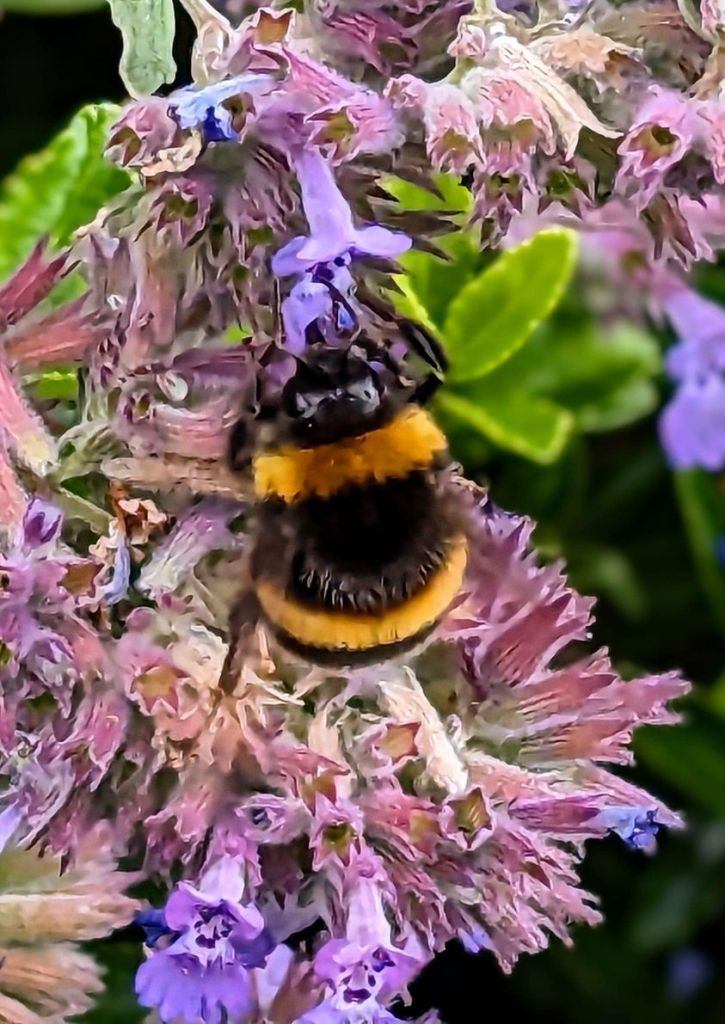
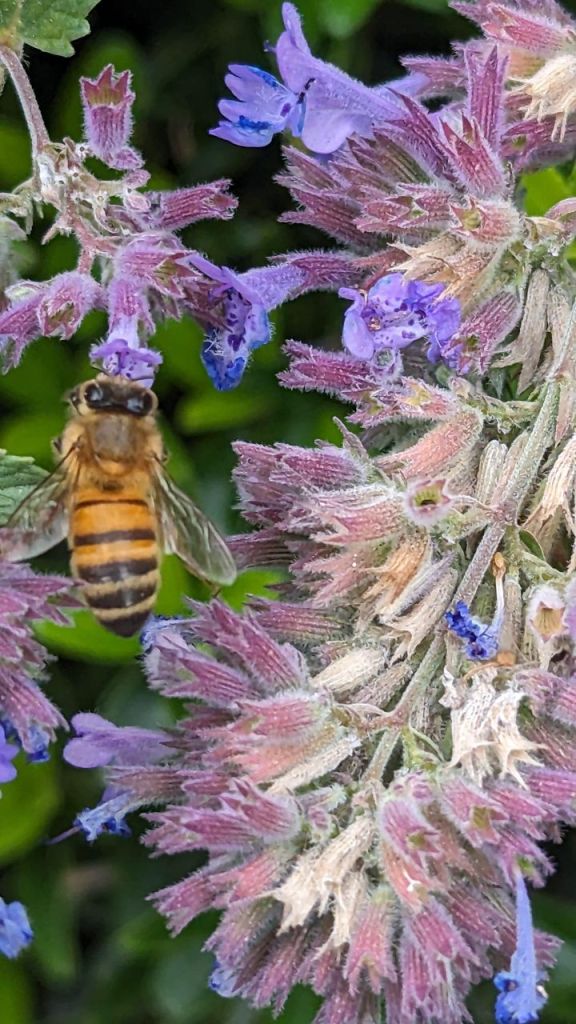

Bees are lovable and thus a good medium of getting young people interested in supporting their local bee communities. In addition, bees do a very important job of transferring pollen between the male and female parts of plants, allowing plants to grow seeds and fruit. They also produce other good stuff: royal jelly, pollen, beeswax, propolis and honey bee venom.
Unfortunately, human activities are destroying bee populations. Due to habitat loss, intensive farming practices, changes in weather patterns and the excessive use of agrochemicals such as pesticides, we are killing off bees.
Bee Diversity
There are many different species of bee (about 20,000!). Most are solitary bees, 250 bumblebee and 9 honeybee species worldwide, although there is only one honeybee in the UK.
Loving bees
Bees are cute! If you take a look in your garden early in the morning you will come across bees sleeping inside flowers! Male bees don’t have a nest to go home to, so some find a cosy flower to tuck in for the night.

Here’s something to bear in mind the next time you reach for your honey pot: a worker bee lives for less than 40 days, visits up to 1,000 flowers in its lifetime, and makes less than 1 teaspoon of honey. Thus for us, it is only one teaspoon of honey, but for a hardworking bee, it is a lifetime of work. So let us support bees!
Research has shown that native plants were more attractive to bees than non-native plants. Wildflowers provide lots of the essentials that bees need to thrive; food in the form of nectar and pollen, as well places to shelter and rest. Apparently, bees prefer blue flowers, so borage, echium and cornflower provide a vibrant mix of blues, and to make it even more attractive for bees, spice the blues up with rich-red common poppies. Top wildflowers that bees love:
- Clover
- Dandelion – thus do not pick them in early spring, save them for the bees
- Ox-eye daisy
- Blue bell
- Poppy
- Cowslip – this sunny plant is a great source of pollen for bees
- Lavender
- Marigold
- Sunflowers
- Foxglove
- Alium
- Echinacea

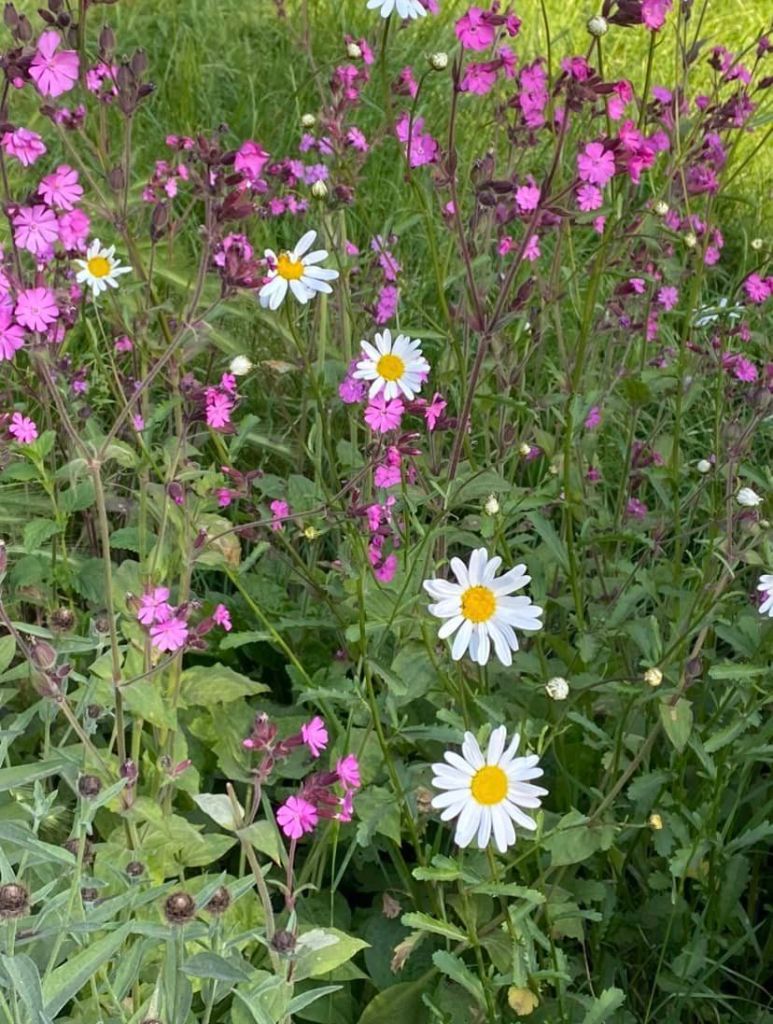
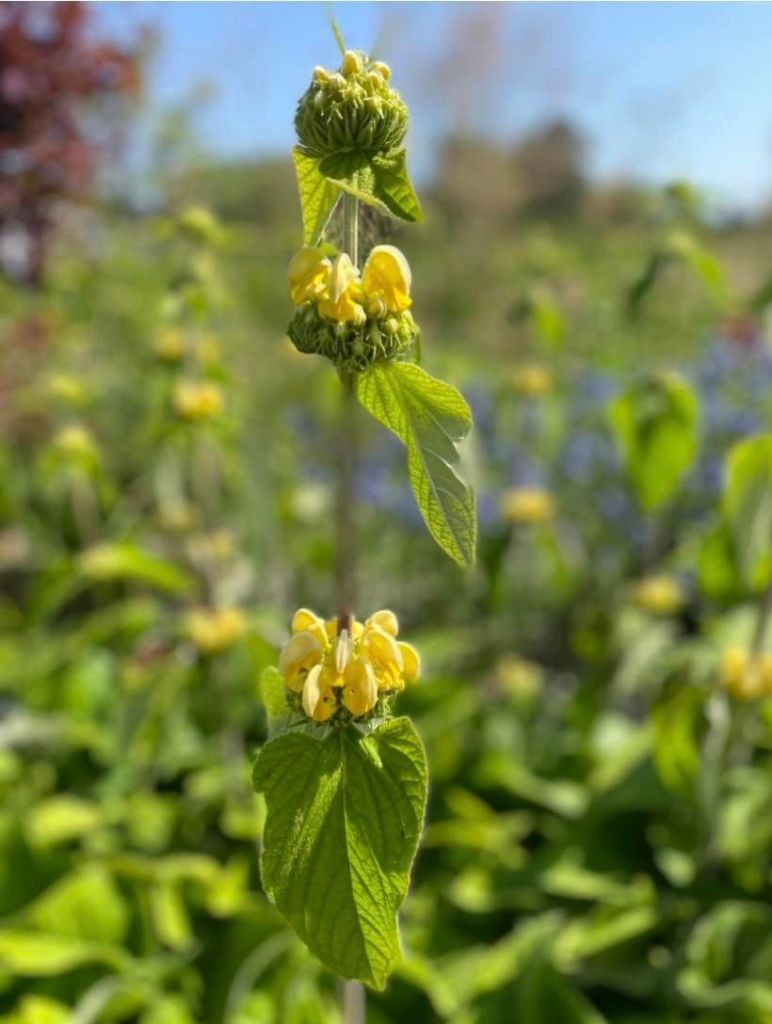
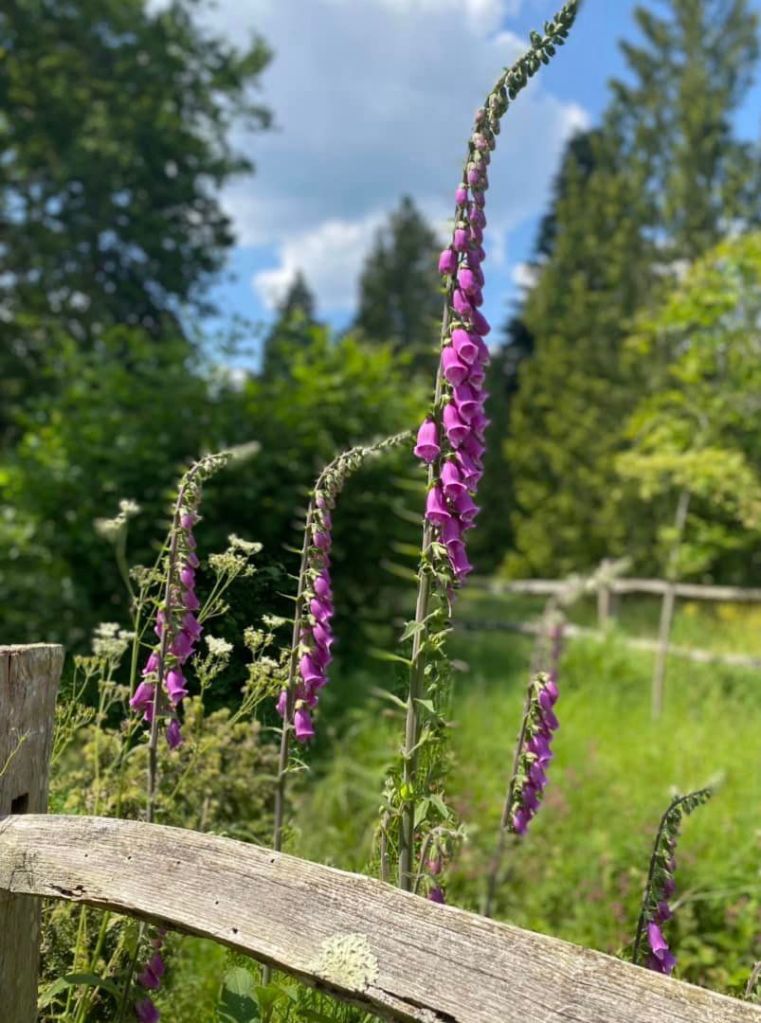

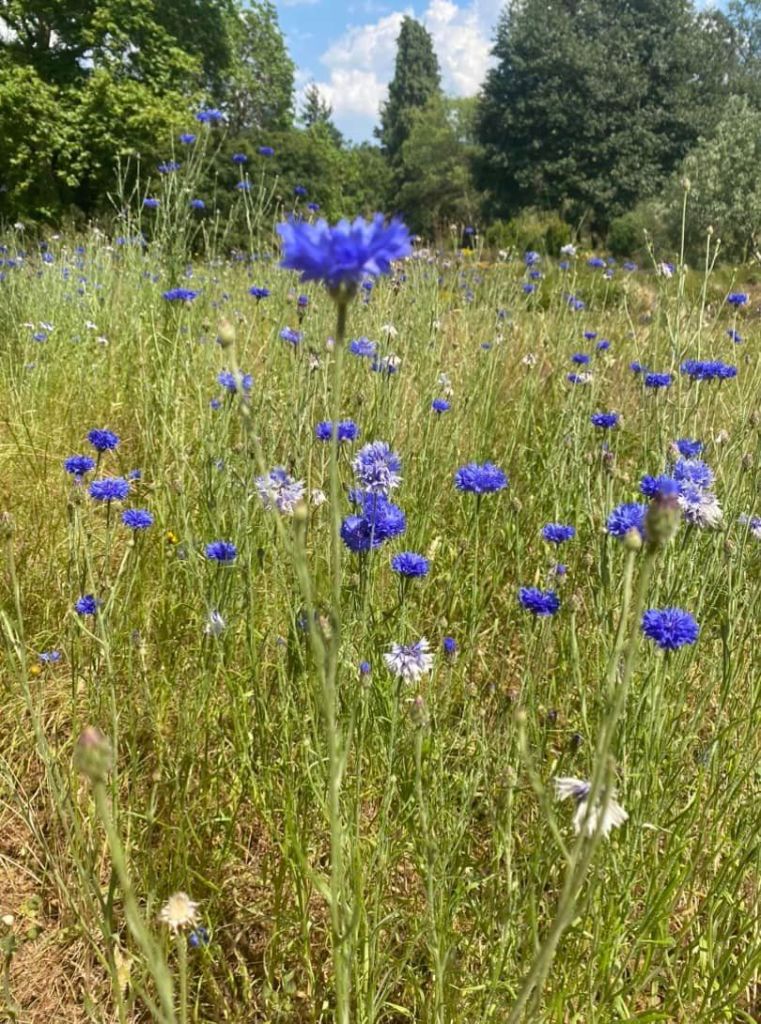
Planting a mix of these plants will increase biodiversity in your garden and improve your soil health. Many of these plants listed above die down naturally in winter, providing the ingredients for green manure
This is a small patch of wildflowers in front of my house. It is only a tiny patch, left to grow wild intentionally, but there is such diversity in this small patch! There are two edible plants here (dandelion leaves and Jack-in-the hedge) as well as a profusion of herbs – thyme and oregano.
How to make wildflower balls
In the UK we have lost 97 per cent of our meadows since the Second World War, so planting garden meadows – a combination of wildflowers and wild grasses – can help to make up for these lost habitats and provide food and shelter for a huge range of species.
What you need:
- As much native British wildflower seeds as you can collect
- 10 heaped tablespoons of compost
- 1 heaped tablespoon of flour
- water
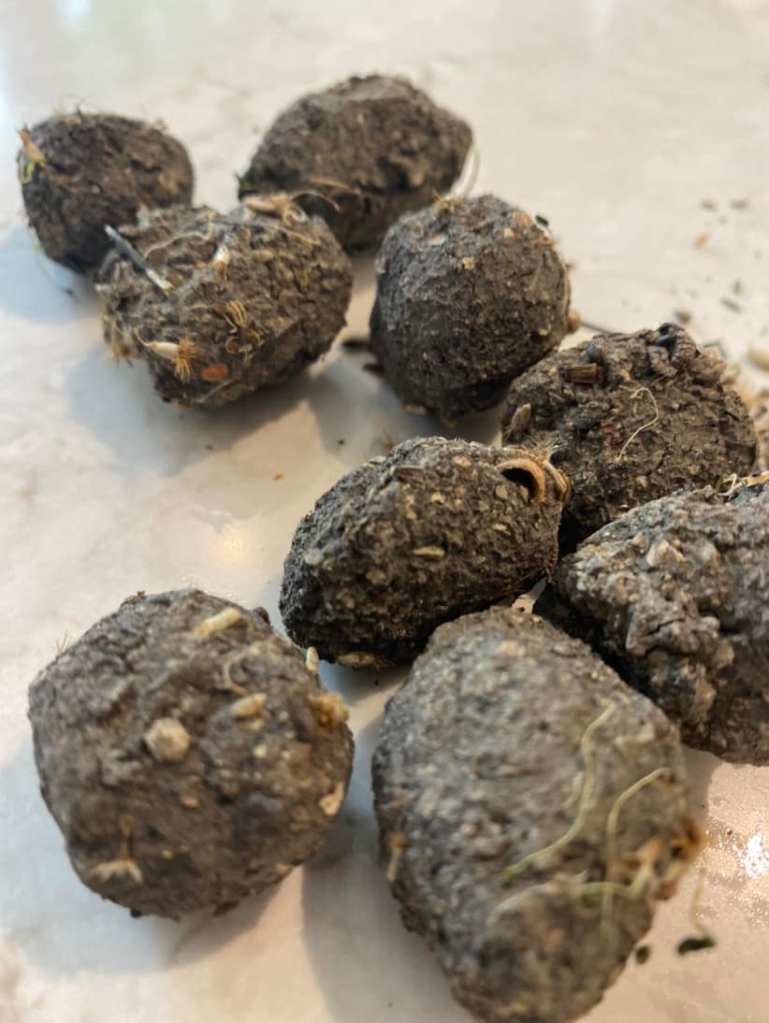
In a mixing bowl, mix together the compost and flour. Add water, a little at a time, until the mixture feels doughy and sticky. Divide into 10 balls. Spread the seeds thinly on a tray. Roll your compost/flour balls around until they are covered with seeds.Leave to dry for a day or two and then they’re ready. You can sow wildflowers in spring, typically from March to April. You can usually also sow seed in September, but avoid heavy, clay-like soil as waterlogged soil over winter will kill the seeds. Birds love the young seedlings, so watch out for them! (covering with a net helps).
 Cheese Plant Books
Leave a comment